Feeding Your New Kitten: Food and Mealtime Guide
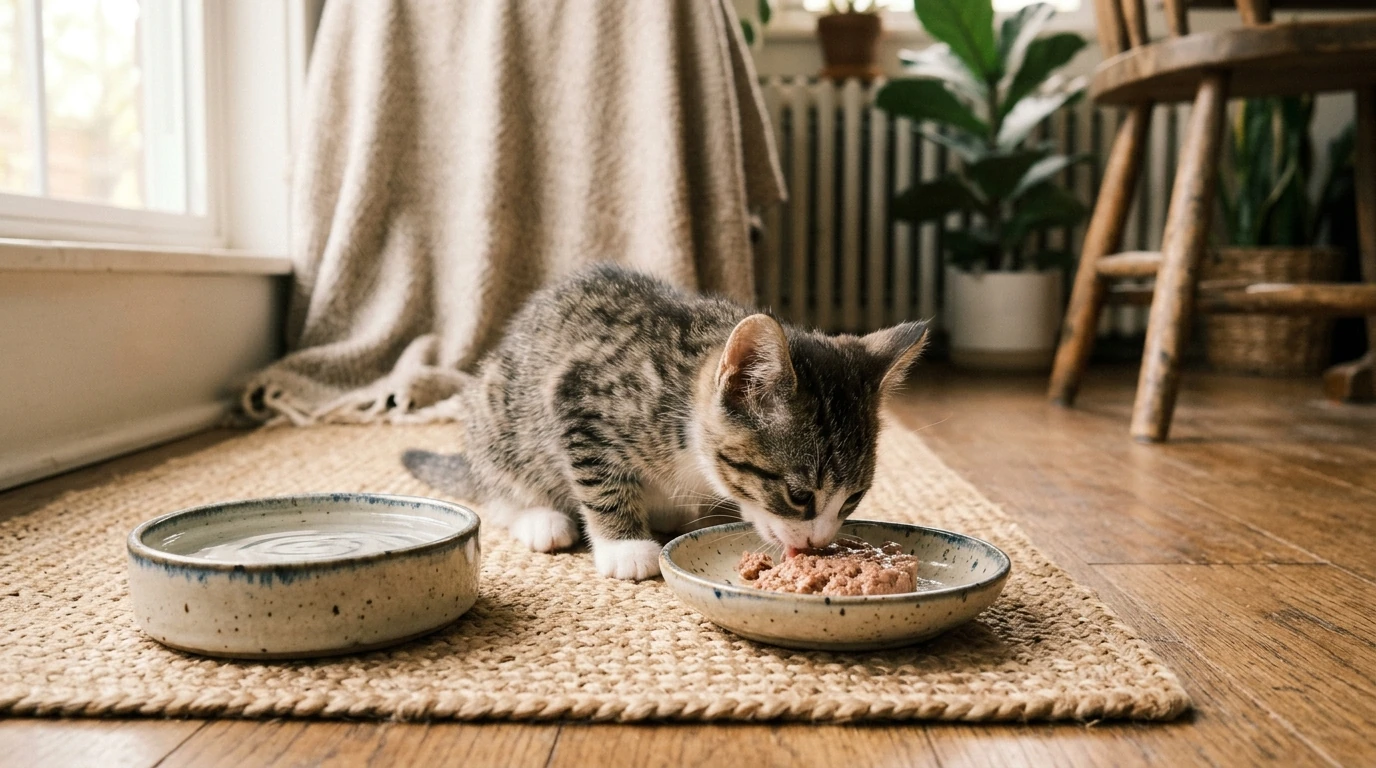
The first few days with a new kitten are full of discoveries, including what makes mealtimes comfortable and predictable. A familiar food, fresh water, and a quiet spot can help you establish a routine while you learn what your growing kitten needs.
Our Feeding Your New Kitten Right ebook is a resource for new owners looking for guidance on where to begin. Pair it with advice from your veterinarian, who can tailor feeding recommendations to your kitten’s age, health, and growth.
Start with food made for kittens
Kittens grow quickly and need a diet formulated to support growth, rather than one intended only for adult maintenance. When choosing a food, look for the nutritional adequacy statement on the package. It should identify the food as complete and balanced for growth or for all life stages.
The FDA’s guide to reading pet food labels explains where nutritional information appears and what it means. Your veterinarian can also help you compare suitable foods and decide whether wet food, dry food, or a combination makes sense for your kitten.
If you’re caring for a very young or orphaned kitten, ask a veterinarian for age-specific feeding advice. Kittens that are not yet weaned have different needs from those already eating solid food, and they may require special care and feeding equipment.
Make the first meals feel familiar
Before your kitten comes home, ask the previous caregiver what food they have been eating, how much they receive, and when meals are usually offered. Keeping that routine consistent at first, when practical, gives you a useful starting point during a change in surroundings.
If you decide to switch foods, introduce the new one gradually over several days. Begin by mixing a small amount of the new food into the familiar food, then increase the proportion of new food as you decrease the old. Watch for changes in appetite or stool, and contact your veterinarian if digestive problems occur or if a sudden dietary change seems necessary.
Offer fresh water and choose a calm feeding spot away from the litter box. Place the bowls where your kitten can reach them easily without having to compete with other pets. A little consistency can also help you notice when eating habits change.
| Step | What to do |
|---|---|
| Before arrival | Ask about the kitten’s current food and feeding routine. |
| At mealtimes | Offer kitten-appropriate food and fresh water in a calm place. |
| When changing food | Introduce the new food gradually and watch for digestive upset. |
| At the first vet visit | Discuss portions, feeding frequency, and growth. |
Build a routine that supports growth
Use the feeding directions on the food label as a starting point, not a fixed prescription. Your kitten’s needs will change as they grow, and portions may also depend on their health and activity level. Bring the food package or a photo of its label to your veterinary appointment so you can discuss an appropriate daily amount.
Kittens generally benefit from several small meals throughout the day. The right schedule depends on age and individual needs, so ask your veterinarian how to divide the daily portion. Measuring the food can make it easier to follow that plan and to tell your veterinarian how much your kitten is actually eating.
Pay attention to your kitten’s appetite, energy, and litter box habits. Contact a veterinarian promptly if your kitten refuses food, seems unwell, or has persistent vomiting or diarrhea. Don’t wait for a routine appointment if you’re concerned. The Cornell Feline Health Center also offers general guidance on feline feeding and nutrition.
Keep kitten nutrition guidance close at hand
Our team recommends keeping a reliable resource nearby as you settle into your new routine. Feeding Your New Kitten Right is an essential kitten nutrition ebook focused on starting food choices, healthy growth, and happy mealtimes. It’s a convenient companion to the individualized guidance your veterinarian provides, not a replacement for it.
You can view the Feeding Your New Kitten Right ebook on our product page. The current price is $37.99.
If you’re also balancing a busy family schedule, our 5-Minute Reset for Exhausted Parents audio course is a separate resource for parents seeking a short mindfulness break.
Before choosing, compare the product details with your daily routine, available space, care needs, and preferred setup. The strongest option is usually the one that fits the intended use clearly and remains simple to clean, store, and check before repeat use.
FAQ
What food should I start my new kitten on?
When practical, start with the food your kitten is already eating and check that it is complete and balanced for growth or all life stages. Ask your veterinarian to help you choose a suitable food.
How often should a kitten eat?
Several small meals are generally appropriate, but the right frequency depends on your kitten’s age and individual needs. Ask your veterinarian to recommend a schedule and daily portion.
Can I change my kitten’s food immediately?
A gradual transition over several days is generally preferable when possible. Consult your veterinarian if your kitten has digestive upset or needs a sudden dietary change.











Leave a comment